The Questions
What cameras and lenses does a wedding photographer actually use? How do I photograph a wedding in low light? Why don't I use flash during ceremonies? And how do I create natural-looking photographs once the sun goes down?
These are questions I get asked from time to time, so I thought I'd give you a little insight into how I photograph weddings, the equipment I use and, perhaps more importantly, why I use it.
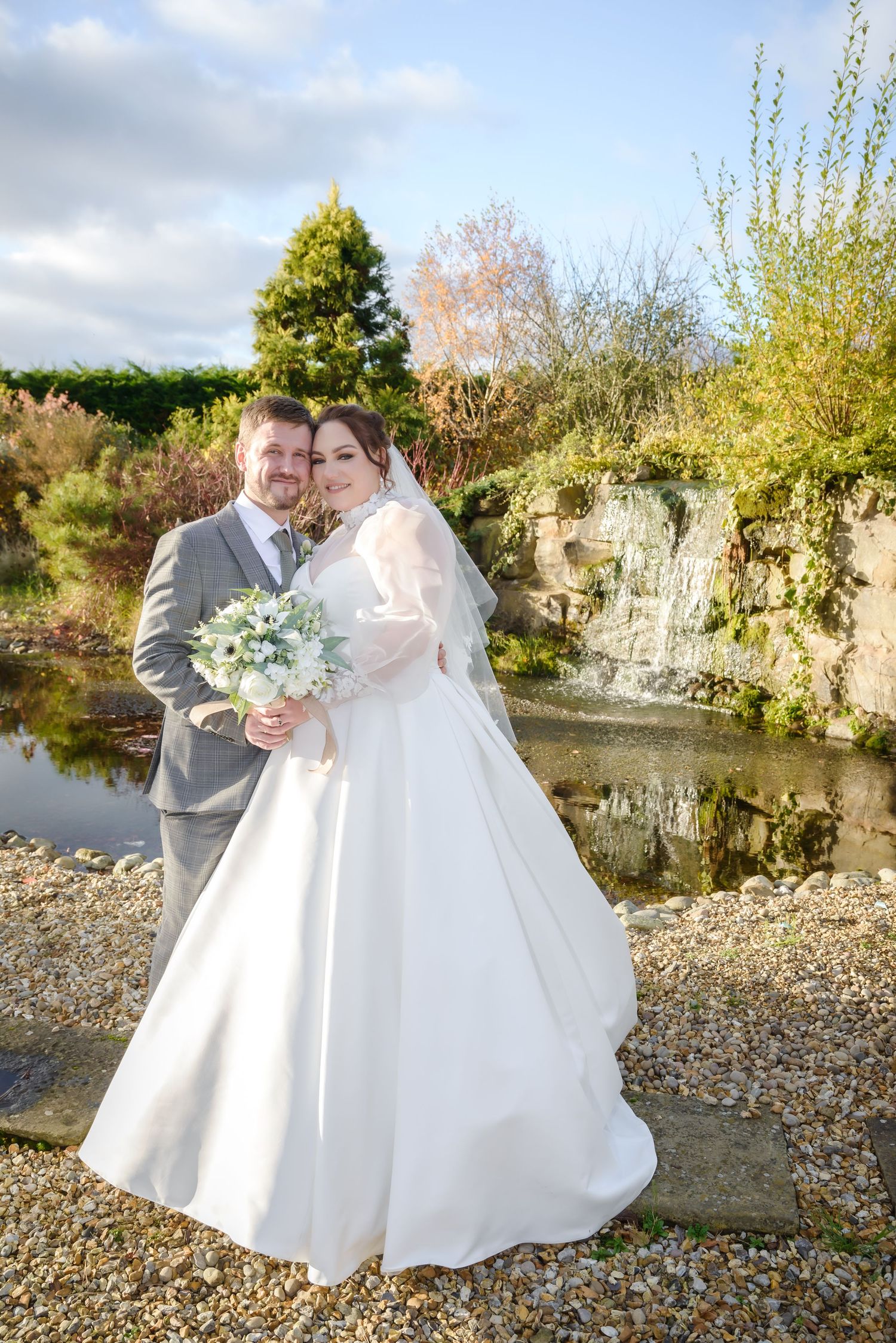
My approach to wedding photography is natural, relaxed and documentary-inspired. I don't want your wedding day to feel like a photoshoot. I want you to enjoy your day while I quietly document the people, emotions, laughter and moments that make it yours.
The equipment I use is there to support that approach.
My wedding photography camera setup
My main cameras are Nikon full-frame DSLR cameras.
I work with two camera bodies throughout a wedding day. There are several reasons for this.
Firstly, weddings are a one-chance event. There are no second takes, and I need to know that I have reliable equipment with me.
Secondly, having two camera bodies means I can have my 35mm and 85mm lenses available at the same time. Rather than constantly stopping to change lenses, I can quickly switch between perspectives as the moment requires.
That is particularly important during ceremonies, speeches and the reception, where moments can happen in a fraction of a second.
For me, wedding photography is about being ready before something happens rather than trying to react afterwards.
My Nikon 35mm f/1.8 lens
The 35mm f/1.8 is one of my most important wedding photography lenses.
On a full-frame camera, 35mm gives me a natural perspective while still allowing me to include plenty of the environment around my subject.
That makes it perfect for the documentary side of my wedding photography.
I use the 35mm for things such as:
- Wedding preparations
- Documentary photographs
- Guests interacting
- Ceremony photographs
- Confetti
- Groups
- Reception photographs
- Dance floor images
- Environmental portraits
- Capturing the atmosphere of the venue
One of the reasons I love the 35mm is that it encourages me to get involved in what's happening.
I'm not standing miles away with a huge telephoto lens. I'm often relatively close to the action, allowing me to photograph people as they interact naturally.
The f/1.8 aperture is also extremely useful when photographing weddings in difficult lighting conditions. Churches, ceremony rooms, dark reception venues and evening celebrations can all present challenging light, and having a fast lens gives me another tool to work with.
My Nikon 85mm f/1.8 lens
At the other end of my setup is the 85mm f/1.8.
Where the 35mm allows me to tell the story by including more of the surroundings, the 85mm allows me to isolate people and concentrate on individual moments.
It's particularly useful for:
- Couples' portraits
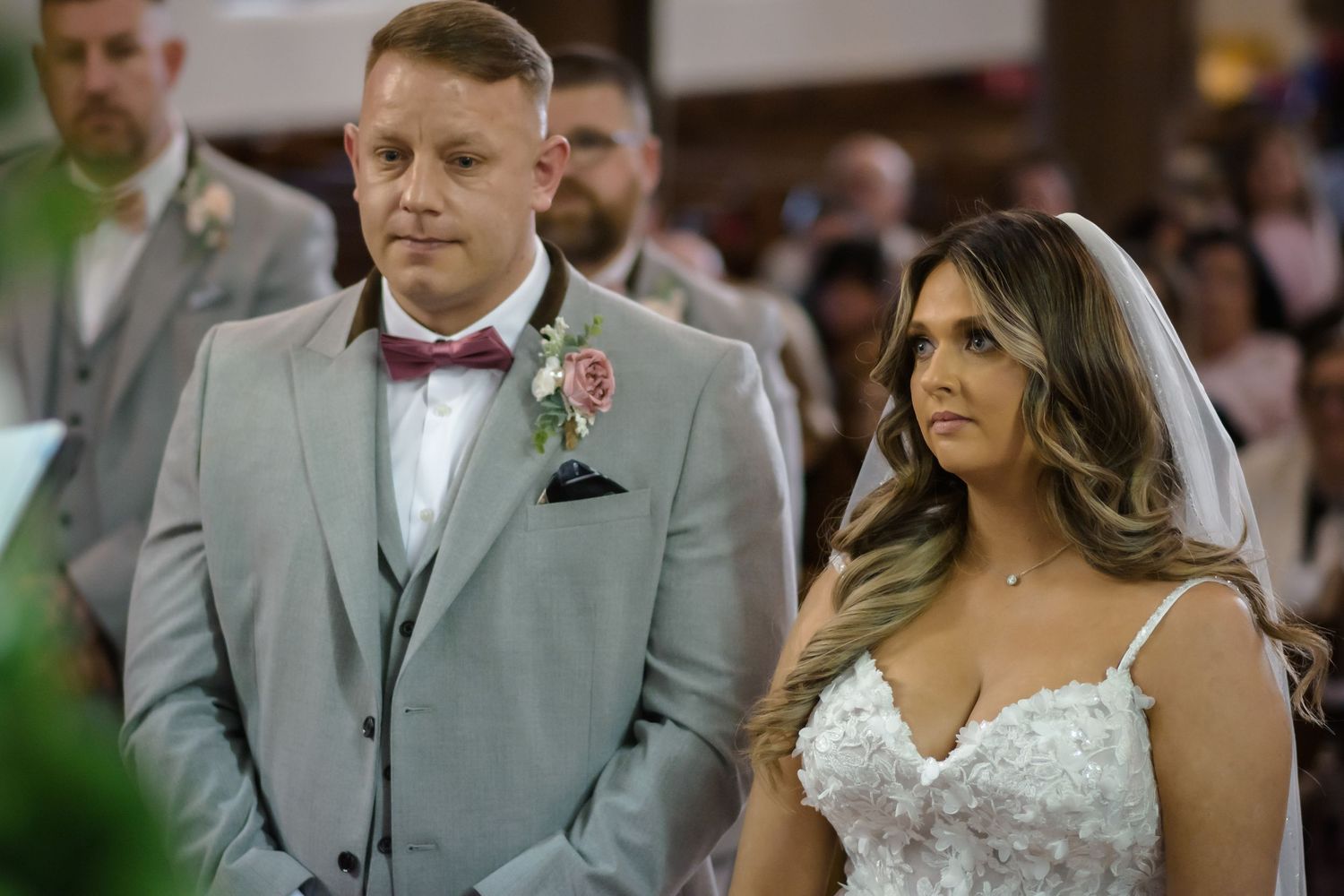
- Emotional moments during the ceremony
- Speeches
- Reactions from parents and guests
- Individual portraits
- Intimate documentary moments
- Working in low light
The 85mm is also fantastic when I need to give people a little more space.
During a ceremony, for example, I can photograph an emotional reaction without putting myself directly in front of the person experiencing it.
That's important to me.
I want to photograph the moment without becoming part of the moment.
The wide f/1.8 aperture also allows me to create beautiful separation between the subject and the background, while still retaining the natural atmosphere of the wedding venue.
Why I don't use flash during wedding ceremonies
One question I'm often asked is whether I use flash during the ceremony.
The answer is no.
I don't use flash during wedding ceremonies.
That's a deliberate choice.
A wedding ceremony is about the couple, their families and their guests. It's not about the photographer.
I want to remain as unobtrusive as possible and allow the ceremony to unfold without introducing unnecessary distractions.
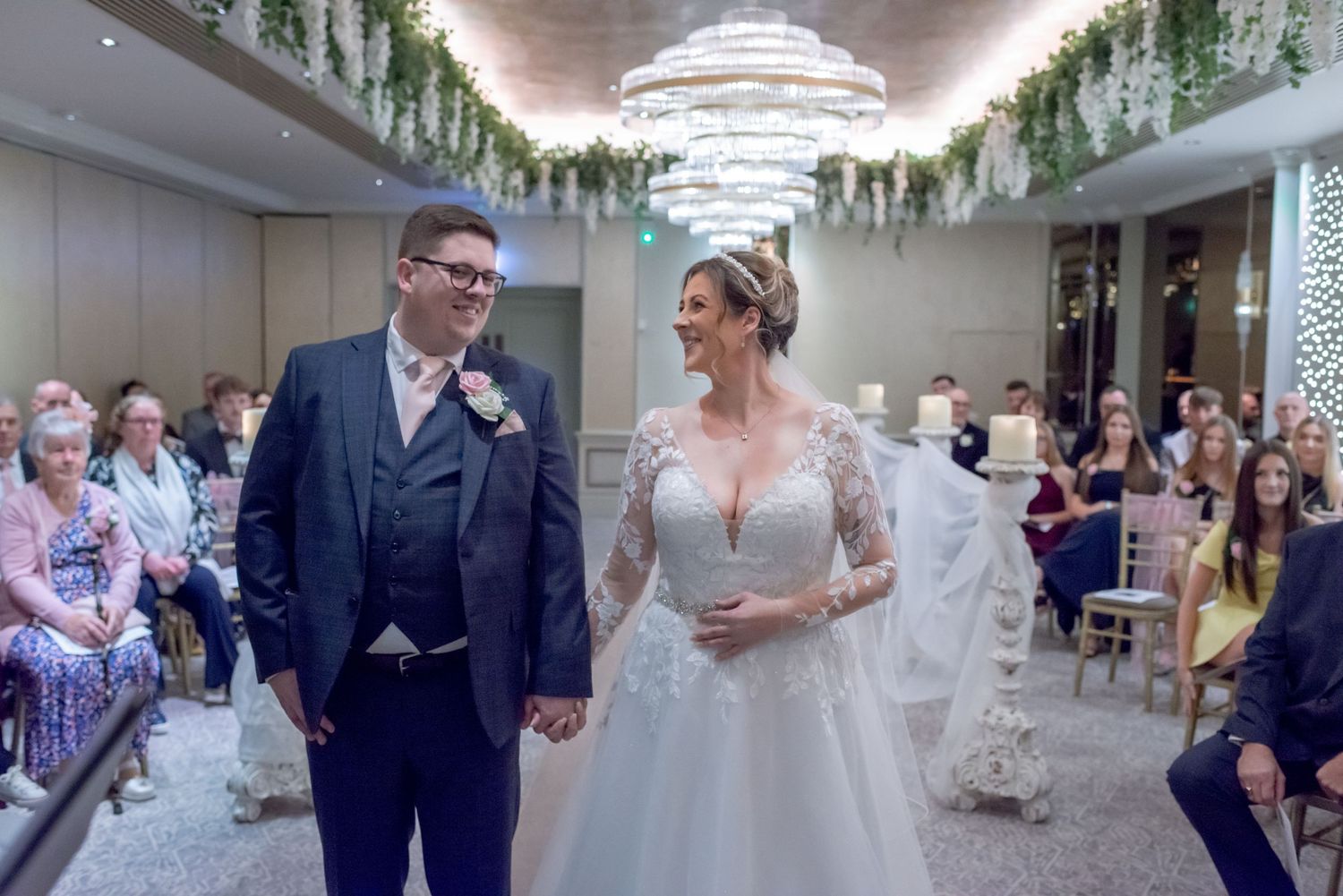
Instead, I work with the available light using my cameras and fast f/1.8 lenses.
Of course, the light isn't always perfect.
A church can be dark. A ceremony room can have very little natural light. The weather can change. Sometimes I'm working at high ISO levels that would have been unthinkable with older cameras.
But that's part of wedding photography.
I'm constantly assessing the light and adjusting my camera settings to work with what's in front of me.
I don't expect the couple to stop, pose or wait for me to create the photograph.
The moment comes first.
Natural wedding photography doesn't mean "no flash"
This is an important distinction.
I describe my style as natural, relaxed and documentary, but that doesn't mean I refuse to use artificial lighting.
Quite the opposite.
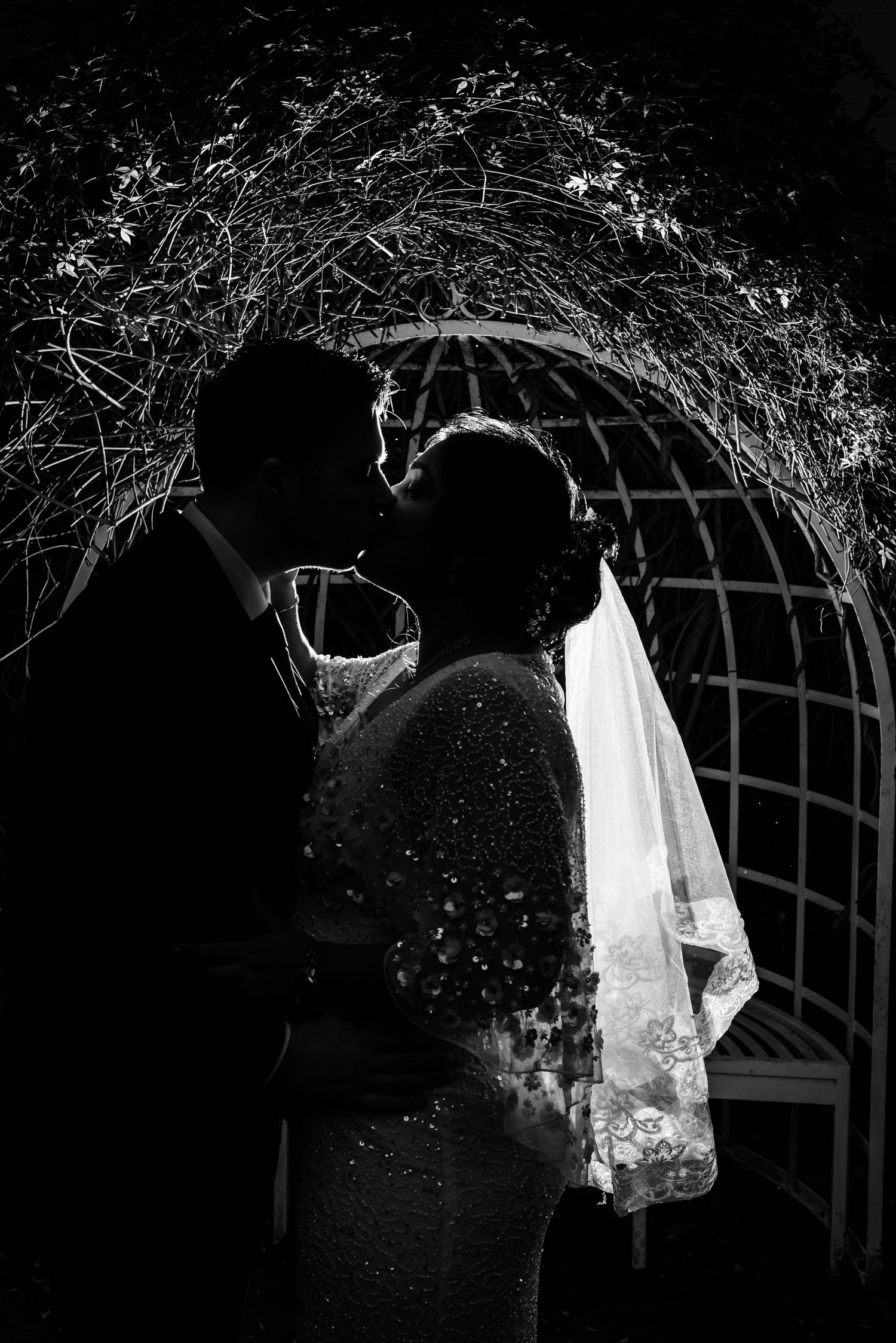
Once the ceremony is finished, particularly as the light starts to disappear, flash becomes another creative tool.
I use Godox flash equipment and Godox triggers, both on-camera and off-camera depending on the situation.
The key is knowing when to use flash and when not to use it.
I don't want every photograph to look as though it has been blasted with direct flash.
My aim is to use lighting to complement the existing atmosphere rather than destroy it.
Using off-camera flash for couples' portraits
When we reach the couples' portrait part of the day, I may use off-camera flash where the conditions call for it.
This can be particularly useful when the natural light isn't giving me quite enough direction or separation.
Rather than simply pointing a flash directly at the couple, I can position the light away from the camera and control its direction.
This gives me much more control over the final photograph.
The important thing is that the lighting should still feel natural.
I want you to look back at your photographs in years to come and remember where you were and how the day felt, rather than immediately thinking about the lighting technique I used to create the photograph.
Photographing speeches with flash
Speeches are another part of the wedding where lighting becomes increasingly important.
By the time speeches begin, natural light may already be disappearing, particularly during autumn and winter weddings.
I use my Godox lighting system to provide consistent illumination while still allowing me to capture the atmosphere of the room.
I'm not only photographing the person giving the speech.
I'm watching the room.
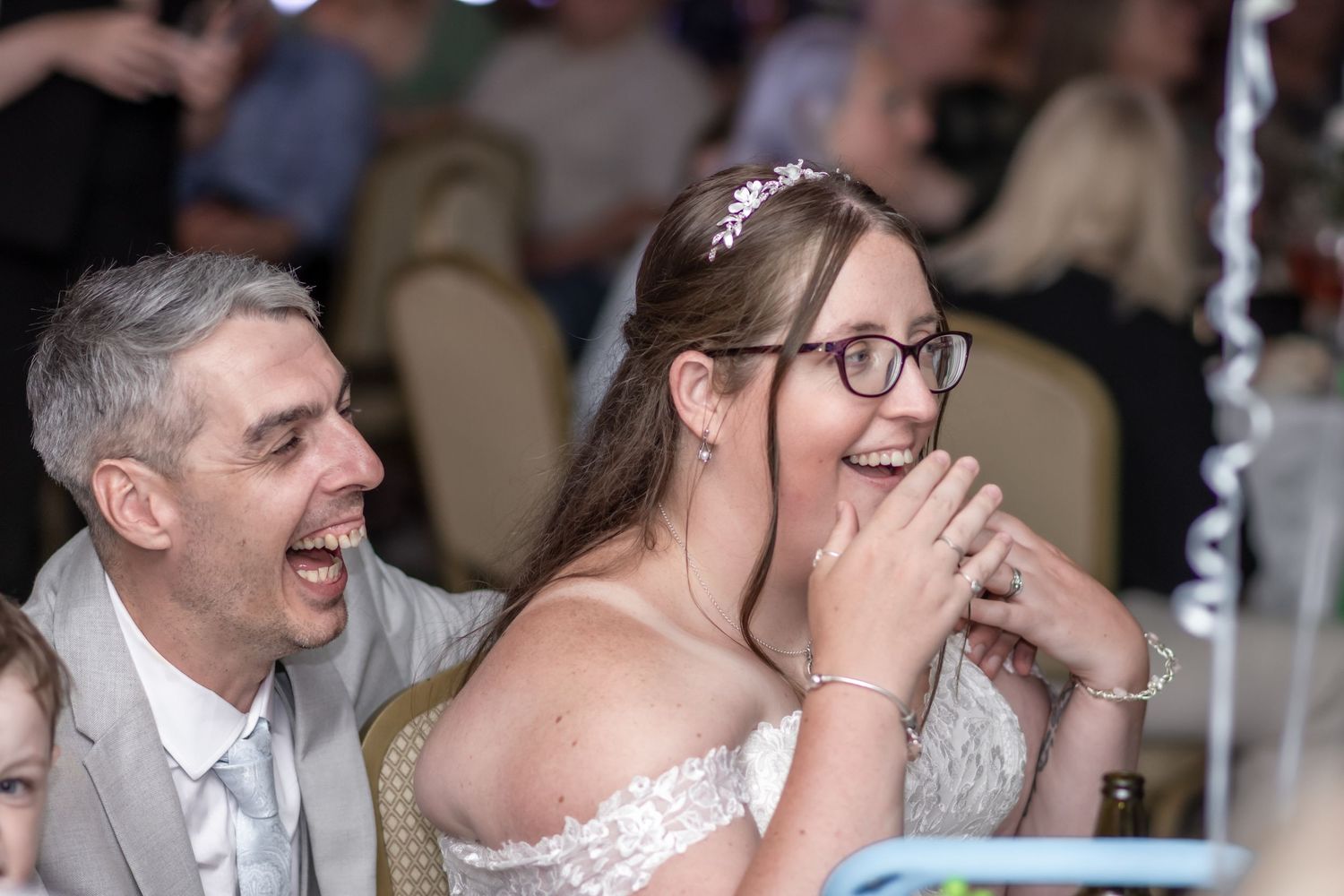
The bride laughing.
The groom looking embarrassed.
Parents becoming emotional.
Friends reacting to a story.
Guests laughing at something unexpected.
Those reactions are often just as important as the person holding the microphone.
Having two cameras with different focal lengths available allows me to move between the wider 35mm perspective and the more intimate 85mm perspective quickly.
First dance photography
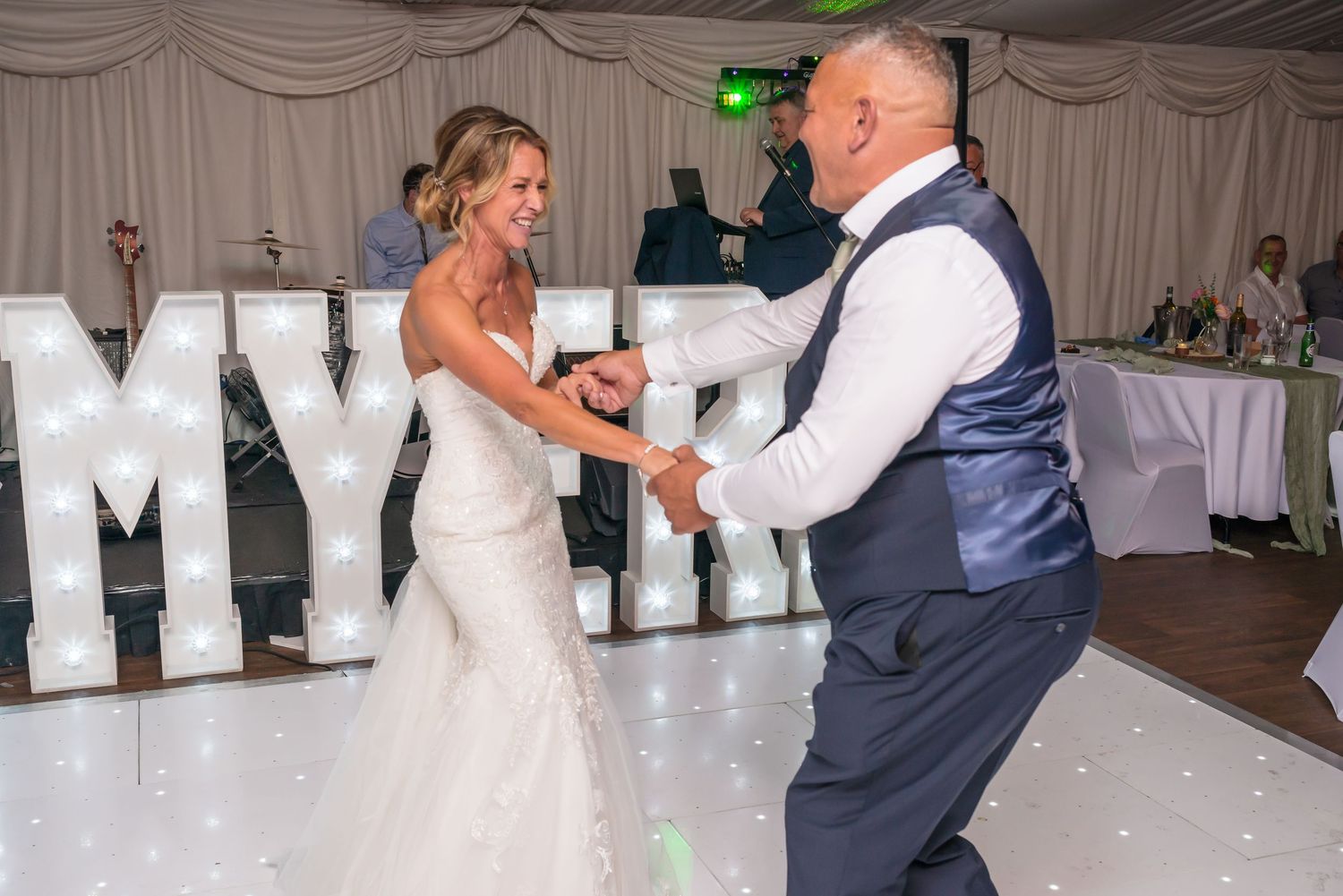
The first dance is another situation where off-camera flash can make a huge difference.
The room may be dark, there may be DJ lighting, coloured lights, fairy lights or other sources of illumination, and the couple will be moving constantly.
I want to capture that movement and atmosphere while still ensuring the couple stands out from their surroundings.
This is where I can use my Godox flashes and triggers to create a more controlled lighting setup.
The trick is balancing the flash with the existing ambient light.
If I overpower the room with flash, the atmosphere disappears.
If I don't use enough light, the couple can become lost in the darkness.
Getting that balance right allows me to create photographs that retain the atmosphere of the reception while giving the couple the attention they deserve.
Reception and dance floor photography
Once the party really gets going, things become much less predictable.
And that's exactly what I like about documentary wedding photography.
I'm looking for the moments that aren't planned.
Friends dancing.
Parents enjoying themselves.
Children running around.
People laughing.
Unexpected interactions.
Hugs.
Crazy dance moves.
The couple surrounded by the people they love.
This is where on-camera flash can become particularly useful.
It gives me the flexibility to move around the dance floor and continue photographing as the light levels drop.
I'm still balancing the flash with the ambient light, rather than simply lighting everything from the front.
The result is a set of photographs that captures the atmosphere of the party as well as the people within it.
Why I use fast f/1.8 lenses for wedding photography
My 35mm f/1.8 and 85mm f/1.8 lenses aren't just about creating a shallow depth of field.
The wide apertures give me flexibility when the available light becomes challenging.
Weddings don't take place in controlled studio environments.
I might photograph a bride getting ready in a bright hotel room in the morning and then find myself in a dark church an hour later.
Later that same day I could be photographing speeches in a dimly lit room before finishing the evening on a dark dance floor.
The ability to work at f/1.8 gives me another option before I need to introduce artificial light.
That flexibility is extremely valuable.
My camera settings change throughout the wedding
There isn't one set of camera settings that works for an entire wedding.
The conditions are constantly changing.
On a bright summer afternoon, I might be working at relatively low ISO.
Inside a darker ceremony venue, my ISO will naturally increase.
As the evening progresses and the available light disappears, I'll adjust my settings again and introduce flash where appropriate.
For flash photography, I generally prefer to work with manual flash power, allowing me to maintain consistency rather than leaving the camera to make all the decisions for me.
It's all about balancing three things:
Available light + camera settings + flash
Getting that balance right is what allows me to keep the photographs looking natural.
The equipment is important. Knowing when to use it is more important.
There are always newer cameras, newer lenses and newer lighting systems being released.
But wedding photography isn't about having the latest piece of equipment.
It's about knowing the equipment you already have.
My wedding setup is relatively straightforward:
Nikon full-frame DSLR cameras.
Nikon 35mm f/1.8 and 85mm f/1.8 lenses.
Godox flash equipment and triggers.
That's my toolkit.
I've photographed hundreds of weddings, and over time I've learned how I want my equipment to work for me.
I don't want to be thinking about cameras and lenses when a father sees his daughter walking down the aisle.
I don't want to be thinking about settings when the couple's grandparents embrace them after the ceremony.
I don't want to be worrying about equipment when the entire dance floor erupts during the first dance.
I want my equipment to become almost invisible.
Ultimately, it's about your wedding — not my cameras
The cameras, lenses and lighting are simply tools.
The most important part of my job is being able to anticipate what's about to happen, position myself correctly and capture it without constantly interrupting your day.
That's why my approach to wedding photography is natural, relaxed and documentary-inspired.
I won't spend your wedding day creating endless lists of forced poses.
I'll give you some direction when it's useful, particularly during your couples' portraits and group photographs, but for much of the day I'll be watching, anticipating and photographing things as they happen.
Because when you look back at your wedding photographs, I don't want you to remember a series of photographs where everyone was told what to do.
I want you to remember the people, the laughter, the tears, the atmosphere and the moments you didn't even realise were happening.
That's what my cameras, lenses and lighting are there to capture.
Looking for a natural, relaxed wedding photographer in Cheshire?
If you're planning your wedding and want photographs that capture the day naturally, without spending hours away from your guests, I'd love to hear from you.
I photograph weddings throughout Cheshire, Runcorn, Widnes, Frodsham, Warrington, Liverpool, Manchester and across the North West, specialising in relaxed, documentary-style wedding photography.
No awkward posing. No constantly disappearing from your wedding. Just genuine moments, beautifully photographed.